Sunday, December 9, 2012

Feels like its still unfinished

Monday, May 21, 2012

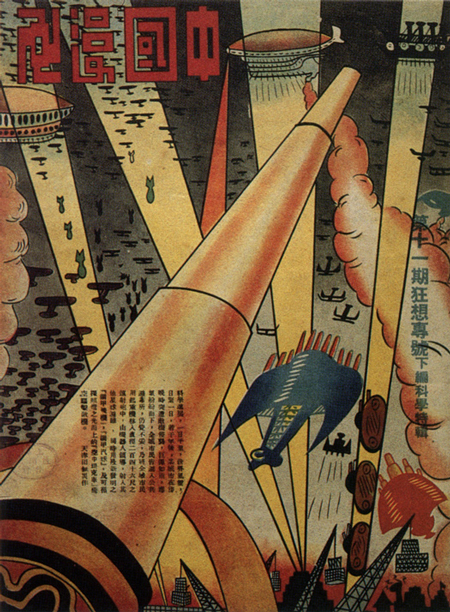
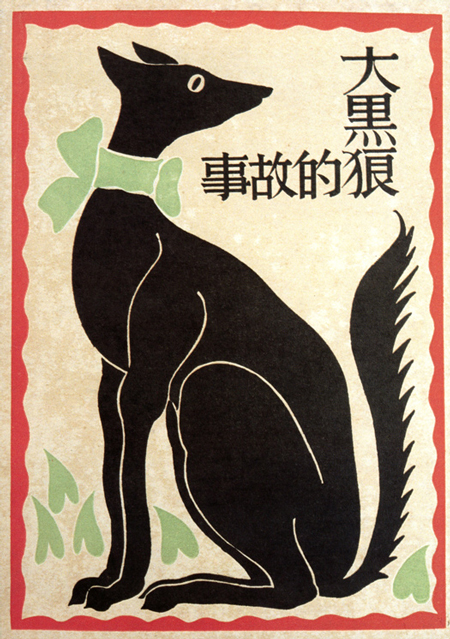
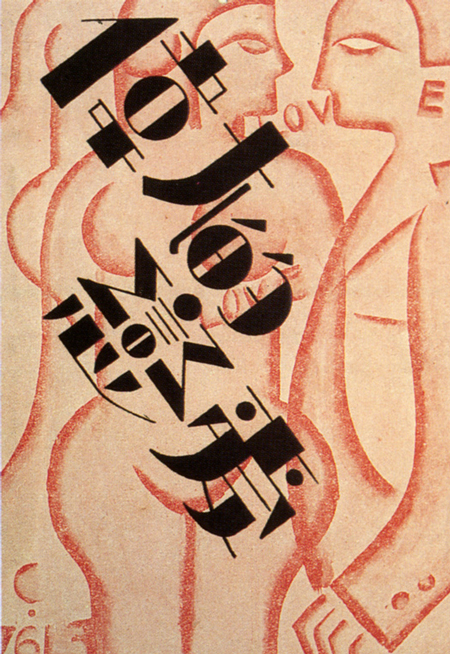
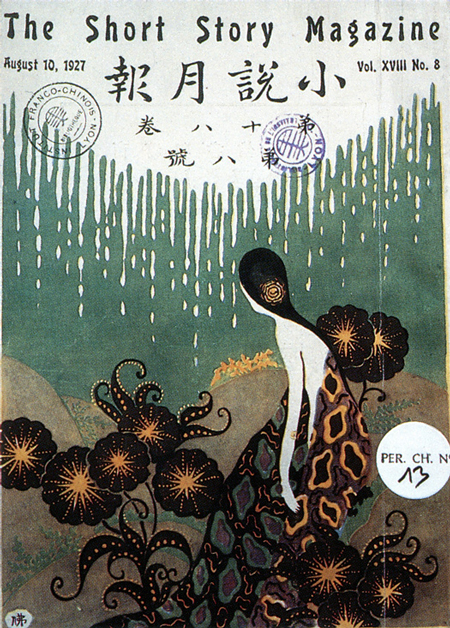
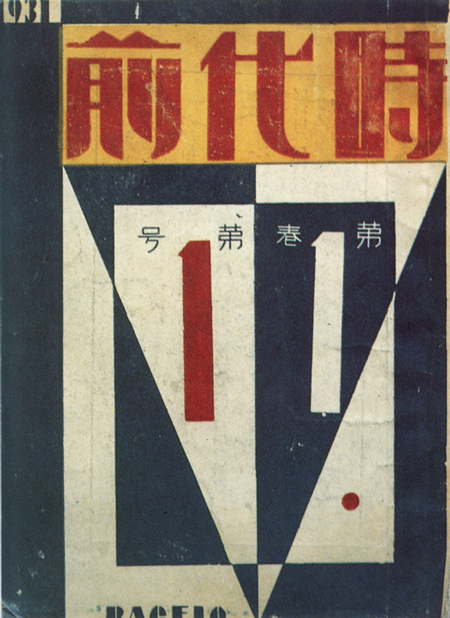
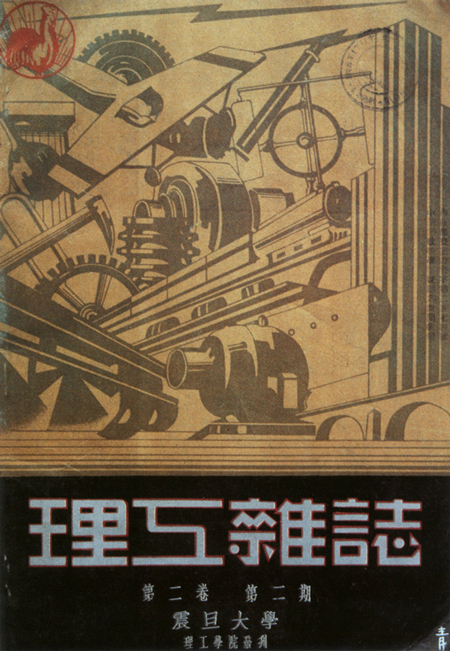
Graphic Design in China in the 1920s and 1930s
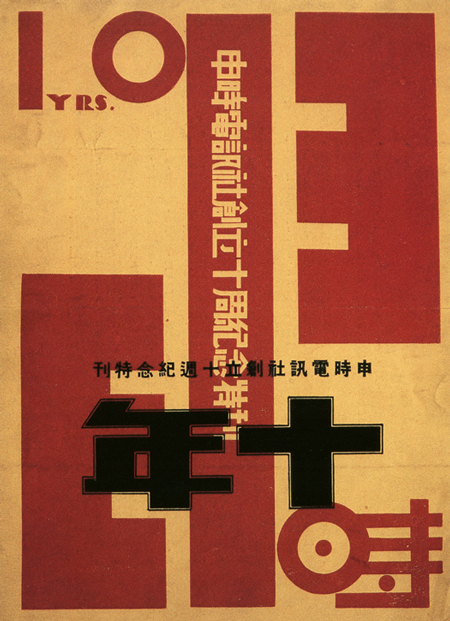
Graphic Design in China in the 1920s and 1930s

A collection of chinese posters taken from Shanghai’s golden age. It’s interesting to see how chinese characters give a whole new face to Art Nouveau or Bauhaus styled posters.

All these posters are taken from the book Chinese Graphic Design in the Twentieth Century.

rss Liked this post?

Get more by subscribing to the rss feed.
Get the blog's updates by email:

1 Comment

Trackbacks

Leave a comment

\

Friday, April 20, 2012

The Magnify Your World Contest | Magnify your world

magnify background


The Magnify Your World Contest

MAGNIFY YOUR WORLD is a contest with six categories for submission and one category specifically designed for the public to vote. Entrants will need to designate their design for one of the six categories below. Each entry is automatically eligible for public voting and to win the Designers Choice Award.
BOOKS: any type of book for the general public (children, photography, design, text/educational, travel, etc.)
BROCHURES & CATALOGUES: created for corporate use including brochures, annual reports, catalogues, media kits
COMIC BOOKS: graphic novels, comic books, web comics
EDITORIAL: magazines, newsletters, newspapers, blogs, online magazines
MUSIC & MOVIE: bands, filmmakers, DJs, theatres, venues, albums, documentaries
SELF-PROMOTION: promotion of services, student portfolios, designers, photographers, writers, PR/ad/interactive/design
firms, law firms, etc.
PEOPLE’S CHOICE: all entries are entered into this category where a winner will be chosen based on public voting. Voting may start as soon as you register, so mobilize your friends and family.

BASIC GUIDELINES & ELIGIBILITY

  • All submissions must be created using the Mag+ platform
  • IMPORTANT: Eligibility to win requires the entrant to upload a MIB-file of their design
  • Each app needs to have a minimum of 5 pages (verticals) with a maximum of 30 pages
  • All work has to be original. We cannot accept submissions of copyrighted material, such as a photography book using National Geographic photos or an album app featuring music from Radiohead.
  • Submit your designs early to be eligible for the Employee Pick of the Month prize.
  • If you submit early, you can continue to refine your design up until the final submission deadline of May 31, 2012.

AWARDS

Our esteemed panel of design leaders will be selecting winners from each of the six categories. Best in Category winners and the Designer’s Choice winner are eligible for Best in Show and the grand prize of $5,000.

Prize Money

  • Best in Category: each winning entry will receive $1,000
  • The People’s Choice Award winner is voted on by the crowd and will receive $1,000
  • Best in Show: the winning entry will receive $5,000

Recognition

  • Best in Category winners will become the face of the next Mag+ advertising campaign
  • All Winners will be featured on the Mag+ web site through the end of 2012

Monthly Prize

Each month an Employee Pick of the Month will be selected by one of the creative leads at Mag+. The winner will recieve an iPad and be displayed on the contest site homepage.

DEADLINES

May 31, 2012: Deadline for Submission entry (all MIBs must be uploaded.) Voting for People’s Choice ends.
June 11, 2012: Best in Category & Designer’s Choice Winner announced
June 20, 2012: Best in Show Winner announced

READY TO COMPETE? JOIN NOW.


Monday, April 9, 2012

How much of your art is Signed or Watermarked?

Sign Your Art so People Can Read It... and Other Tips


Artist Signature Identification from Artbusiness.com >>

Signing your art is an integral part of the creative process. The instant you apply your name to a piece of your art, you declare that art officially finished and ready for public exposure. No matter what your signature looks like, what form it takes or where you put it, no work of your art is complete without one.
Your signature identifies your art for all time as having been created, completed, and approved of by you and you alone (with the exception of collaborative works, of course). When someone wants to know who created your art, your signature tells them. When someone sees your art for the first time and wants to know who the artist is so that they can see more, your signature helps them find you. When you're not around to identify your art (and sooner or later you won't be), your signature identifies it for you.
Far too many artists treat signing their art as little more than an afterthought or inconsequential incident, like signing a check or a credit card receipt. But dismissing the importance of your signature and the moment of signing can lead to all sorts of problems later in a work of art's life. This is especially true the better known or more famous an artist eventually becomes.
The most serious signature problem? No signature. Believe it or not, a significant percentage of artists these days don't even bother to sign their art. Why? Maybe they think their work is so identifiable that everyone automatically knows who did it. Maybe they think everyone knows who they are. Maybe they think everyone will continue to know who they are for all eternity. Well guess what? Maybe they're wrong. So rule number one-- by far the most important rule-- sign your art. Period.
The second most serious signature problem? Names so illegible that the only people who can identify them are those who already know the artist... because they're the only ones who can recognize the signature when they see it (they can't actually read it; they just know what it looks like). Anyone outside the immediate inner circle is pretty much screwed. So rule number two-- sign your name so that people can read it. To repeat: Sign your name so that people can read it. You don't necessarily have to sign legibly on the front of the art, but make sure you clearly sign or otherwise label or identify your art as being by you-- somewhere, anywhere-- as long as it's on or attached to the art.
Artists sign their names illegibly for a variety of reasons, similar to those who don't sign at all. Some think it looks good, some do it to impress people, others think their work will always be identifiable as theirs whether or not anyone can read or recognize their names, still others feel that an unreadable signature has a mystique about it, an only-special-people-can-read-it quality. Maybe, like with artists who don't sign at all, they're so over-infused with hubris, they actually believe that no one will ever forget who they are or ever question who made their art. The truth about that? Nothing is further from the truth.
Here's a signature example for you... care to take a guess?


To begin with, so many artist signatures (of all time periods) are difficult or impossible to read that they've become a significant problem in the marketplace and identifying them, an industry in and of itself-- so much so that there's even a book about them. Author and art researcher John Castagno wrote Artists' Monograms and Indiscernible Signatures, An International Directory, 1800-1991, containing over 5,000 such examples, and it's not even close to being comprehensive. FYI, I actually offer a service where I charge a fee to identify indecipherable signatures (and only charge if I make positive identification-- which sometimes I do, but many times I don't). If artists had any idea what happens to art with signatures that can't be identified by using Castagno's book, searching randomly online, lucking out and finding someone who just happens to recognize the art, or enlisting identification services offered by people like me, a lot fewer signatures would be deliberately incomprehensible.
How does art lose its identity? You as an artist should be aware that people buy art all the time and never tell anyone who the artist is. People buy art all the time and forget who the artists are. People sell, donate, transfer or otherwise give away art all the time, without ever informing the new owners who the artists are (assuming they even remember), for instance, when they move or downsize their residences, redecorate, or when they just plain get tired of looking at it. Art also loses its identity when it changes hands through death, divorce, inheritance, barter, as gifts, and so on.
In fact, here's a perfect example of what I'm talking about. Let's say someone buys a piece of art with an illegible signature for a hundred bucks at an artist's first show just because they like it and can afford it (the artist, of course, is a complete unknown). A few years later, that buyer is moving or his tastes have changed or whatever, so he gives the art to an acquaintance because she likes it. It's new owner doesn't ask who it's by, doesn't really care, and he doesn't bother mentioning who did it (assuming he even remembers) because after all, he got it cheap, right? The artist was a nobody, right? Right. Now let's say that it's 20 years later, the artist is famous, and that piece of art is now worth $100,000. You beginning to get the picture? Hey-- it happens-- and it happens a lot more often than you think.
Whenever a work of art ends up in circumstances where nobody knows, remembers, or can identify the artist, and nobody really likes or cares about it all that much (forget about how good it may be from a critical perspective or how famous the artist might be), it ends up at flea markets, garage sales, auctions, the Salvation Army, Joe's Maison de Junk, in the garbage, in the fireplace, garages, attics, gathering mold in basements or outbuildings, getting crammed into storage lockers, protecting barbeque grills from the rain, or becoming toys for little Billy-- you name it.
Do you want to jeopardize your art's future simply because people have difficulty reading your signature? I doubt it. And don't think that just because you're known in certain circles-- or even nationally or internationally for that matter-- that your art is safe forever. Not even art by the most famous artists in the world is identifiable by everyone. Wayward works of art by famous artists are rediscovered all the time, and do you know the main reason why? Because luck has it that someone somewhere with adequate knowledge of what they're looking at can identify either the styles of the art or their signatures and rescue them. And in all the rest of the cases where no guardian angel comes along, that art is off to oblivion. The moral of the story is that you can sign your name as inscrutably as you want and wherever you want as long as you also clearly identify yourself as the artist elsewhere on the art. Or risk the consequences.
Additional pointers for signing your art:
* Art by artists who sign with initials, monograms, and symbols often meets similar fates to illegibly signed art. Here again no matter how infatuated you are with your fabulous handle, clearly sign or otherwise identify yourself elsewhere on your art.
* Sign your art in the same medium in which you create it (except for graphics or limited editions, which are generally signed in pencil). For example, sign a watercolor in watercolor, an acrylic in acrylic, and an oil painting in oil paint. When you sign in a different medium, you increase the chances of someone will eventually question whether or not the art was actually done by you. Hey-- it happens all the time.
* Placing your signature or monogram into the compositions of graphics or limited editions (signing in the plate or composition) in addition to signing them by hand provides extra means of identification and can also "brand" your work or even protect it against people who try to copy it.
* Sign all of your art in pretty much the same way. Signatures should be consistent in size, coloration, location, style (written or printed), and other particulars. That way, people who aren't necessarily familiar with all the styles of art you've produced over your entire career will at least be able to recognize your signature, and therefore identify it as being by you. Also, signing your name in many different ways or locations eventually makes it easier for forgers to sign fakes in various ways and claim they're by you.
* Date your art. You may not think this is important now, but after you've been making art for several decades, you'll understand why. If you don't want to date your art on the front, date it inconspicuously on the back-- or even on the edge. Obviously, dating your art minimizes any guesswork as to when something was completed. The better known you become, the more important dates are for anyone interested in your evolution as an artist... and that includes those who'll be curating your retrospectives.
* If you make works on paper, you may want to use an embossing stamp or even a fingerprint in addition to your signature, thereby making the act of completion more formal and official. Art with your signature and a stamp or a fingerprint is also more difficult to replicate, forge or copy.
* Sign your art as soon as its done, preferably while the paint or clay or whatever medium it's in is still wet or pliable. Collectors prefer signatures that are "embedded" in the art because those types of signatures are the most difficult to forge or duplicate. Furthermore, the closer you sign to the moment of completion, the more you're in the "zone" in which you created the art, and the more unified and harmonious the signature is with essence of the art. The longer you wait to sign, the less the signature tends to match the overall tone or import of the piece.
* Don't sign on top of a varnished painting or completed sculpture because the signature then looks like it was added later, more as an afterthought than a declaration.
* Your signature should not be so bold or overbearing that it actually interferes with or detracts from the composition unless you purposefully intend for that to be a consistent characteristic of your art. It should blend rather than contrast or conflict with its surroundings and look like it "lives" within the art.
* Don't scratch your signature into dried paint, ceramic, or similar media unless this is how you normally sign. Scratched signatures rarely blend with their art and their authenticity can also easily be questioned.
Remember, you're not always going to know where every piece of your art is or where it's journeys will end. And you certainly won't be around for all eternity to vouch for it. Those who buy your art today will not necessarily own it tomorrow (or even remember that you were the artist). Regardless of where your art ends up or who eventually owns it, make sure that it will be treated with care and respect at all times, and never relegated to the "I don't know" pile. By taking the signing your art seriously, you maximize the chances that people will be able to identify and remember you through your life's work for generations to come.

Monday, March 26, 2012

Use Dashes Dashingly
Most fonts are equipped with at least two dashes: an en dash (–, –, which is the width of a lowercase “n”) and an em dash (—, —, which is the width of a lowercase “m”). Don’t confuse these with the hyphen (-), which isn’t a dash at all but a punctuation mark.

THE HYPHEN
Hyphens and dashes are confused to the point that they are now used almost interchangeably by some. Some fonts, such as Adobe Garamond Pro, retain hyphens in their original form; those hyphens look more like the diagonal stroke of a calligrapher’s pen than a straight horizontal line. You’ll also often see hyphens used as a replacement for a minus sign; however, a longer character is available in some fonts for this purpose.
Although the hyphen does look quite a bit like a dash or minus sign, it is a punctuation mark. It should be used primarily to hyphenate words in justified type. On the Web, this isn’t much of a concern because, as mentioned, there is no standard hyphenation control in browsers. The hyphen should also be used in compound modifiers (such as “fine-tuned”), to join digits in phone numbers, and in a few other rare cases (covered in detail on Wikipedia).

THE EN DASH AND THE EM DASH
In The Elements of Typographic Style – which is the unofficial bible of the modern typographer  –  Robert Bringhurst recommends that dashes in text should be the en dash flanked by two spaces. This is much less visually disruptive than using the em dash with no space—which is recommended in editorial style books such as The Chicago Manual of Style — because there is less tension between the dash and the characters on either side of it.
Why go against The Chicago Manual of Style in this case? The reason is that style manuals are concerned mostly with punctuation, not typography. An en dash surrounded by spaces achieves the same effect as an em dash with no spaces, but typographically it is less disruptive. This was a big debate between my editor and me when I was writing my book.
The practice of using two hyphens for a dash is a holdover from the days of typewriters. Besides being visually disruptive to smooth blocks of text, it is now unnecessary with the richer character sets that are available to typographers.
The en dash is also used to indicate ranges of numbers (such as “7–10 days”), although it isn’t flanked by spaces in this case.

http://www.smashingmagazine.com/2011/08/15/mind-your-en-and-em-dashes-typographic-etiquette/

Wednesday, March 21, 2012


Happy St. Patty's Day 2012

Missing everyone while im out here getting ideas for a cover design!

Monday, March 12, 2012


February 14, 2012, 1:38 PM
An Art Exhibit That’s Good to the Last Drop
By DAVID W. DUNLAP

Since mid-September, the artist Gwyneth Leech has spent five days a week working inside the art space at the prow of the Flatiron Building, painting and drawing on used paper coffee cups.
For almost five months, one of the busiest intersections in New York City has been transformed — by the unlikely medium of 800 used paper coffee cups hung from fishing line — into an enchanted cleft in the canyons, a place of visual delight and surprising tranquillity.


BUILDING BLOCKS
How the city looks and feels — and why it got that way.
The cups, on which the artist Gwyneth Leech has drawn or painted vibrant graphic patterns and imagery, fill the glass-enclosed “prow” at the base of the Flatiron Building, on 23rd Street, between Broadway and Fifth Avenue. Suspended in space, they move gently, too, as heat currents rise from the floor registers. It’s a public art installation for which no invitation is needed. Passers-by simply stop — amused, astonished, perplexed, engaged. Or they come by, as Michael Munguia did the other day from Bedford-Stuyvesant, Brooklyn, because their friends have told them they must see the lady who draws on coffee cups.

That’s because the artist herself is there in the window, Tuesdays through Saturdays, from 11 a.m. to 2 p.m., making more of these little works of art. “I think I’ve drawn just about everything you can see from sitting here,” she said. If Ms. Leech spots you through the window, looking curious, she may wave you inside to join her; perhaps to paint a cup yourself.

Take her up on it. At the north end of the Sprint store is a glass door that lets you into the prow. Once you get adjusted to life in a fishbowl, with pedestrian traffic sluicing around you in six directions at once, a surpassing calm takes over. It is not at all unlike the splendid isolation at a ship’s bow as it splits the sea. (Cue Leonardo and Kate.)


David W. Dunlap/The New York Times
But the time to see “Hypergraphia: Gwyneth Leech, the Cup Drawings — Studio in the Prow” is running out. This Saturday will be the final day of the installation. “How will I bear to leave?” Ms. Leech wondered last week. At least there is a logistical advantage to her chosen medium, she said.

“It packs up very small.”

The installation was made possible by the collaboration of Cheryl McGinnis, a dealer who strives to create projects in which artists and the public can interact, and Patrick Robichaud, the curator and manager of Sprint’s Flatiron Prow Artspace. This cow-catcher of a space, formerly used for advertising, has been made available by Sprint as an exhibition gallery. “I found that I like social drawing a lot,” Ms. Leech said of her turn in the space. “It conjures up quilting bees, coffee klatches and salons.”

Ms. Leech, 53, started using cups about four years ago at moments when sketch pads weren’t handy. “I elaborated my technique during jury duty,” she recalled. She didn’t give it much thought until other artists started pointing out that the compositions had a creative focus of their own. “I thought: ‘It can’t be. I’m drawing on used coffee cups.’ Then, I decided to embrace it.”

She liked the cups’ surface, which “has a little bit of tooth to it,” akin to oak tag board, and the fact that the plastic lining allowed for ample use of paint. She appreciated the serendipity involved in solving the problem of a composition whose one end always meets the other, only inches away. She was grateful for the chance to “upcycle,” that is, to reuse an object as something better than what it started to be. And of course, there’s a never-ending free supply.

“Bach had fugues,” Ms. Leech said. “Shakespeare had sonnets. I have used coffee cups.”

Wednesday, March 7, 2012

and ?

Working on Design 4 for GRD 200 Portfolio Class

Saturday, March 3, 2012

The New Case I Purchased

45 Remarkable Typography Design For Inspiration


Digital art typography has really set a great trend in 2011. Experimenting with the right choice of font, splashing with bold or plain colors, and designing it in different perspective are elements that works on typography. It uses on logo, poster, and websites. It does not only attract visitors attention but also create a cool look on your website. In this article, I’ll be featuring collection of typography inspired websites.

http://graphicdesignjunction.com/2012/01/45-remarkable-typography-design-for-inspiration/

Friday, March 2, 2012

Graphic design is a creative process—most often involving a client and a designer and usually completed in conjunction with producers of form (i.e., printers, signmakers, etc.)—undertaken in order to convey a specific message (or messages) to a targeted audience. The term "graphic design" can also refer to a number of artistic and professional disciplines that focus on visual communication and presentation. The field as a whole is also often referred to as Visual Communication or Communication Design. Various methods are used to create and combine words, symbols, and images to create a visual representation of ideas and messages. A graphic designer may use a combination of typography, visual arts and page layout techniques to produce the final result. Graphic design often refers to both the process (designing) by which the communication is created and the products (designs) which are generated.

Common uses of graphic design include identity (logos and branding), publications (magazines, newspapers, and books), advertisements and product packaging. For example, a product package might include a logo or other artwork, organized text and pure design elements such as shapes and color which unify the piece. Composition is one of the most important features of graphic design, especially when using pre-existing materials or diverse elements.
Source
Description above from the Wikipedia article Graphic Design, licensed under CC-BY-SA full list of contributors here. Community Pages are not affiliated with, or endorsed by, anyone associated with the topic.

Thursday, March 1, 2012

http://www.yupousa.com/paper/wally-awards

Call for Entries • Wally Awards 2012

It's that time. Time to show us your most stellar projects completed using YUPO Synthetic Paper. For 2012, Wally will be heading to Boston, and you're invited to participate! The Wally Awards will be held at the HOW Conference, June 20-25th.

So gather up your best work using YUPO, and get ready to WIN!
FREE TO ENTER!

Who can enter?
Anyone who has worked on a project that includes YUPO Synthetic paper!
Designers • Production Managers • Printers • Artists
Creative Directors • Paper Merchants
Package Designers • Blow Molders • Label Converters

What type of projects?
Brochures, business cards, direct mailers, maps, any and everything done on YUPO synthetic paper is eligible and can win.


What can you win?
It pays to enter. And entering is FREE!! Prizes this year include:

Best Design Entry - $500
Best Package Design Entry - $500
Best Artist Entry - YUPO Synthetic Paper Sample Prize Pack

Participants' entries will be on display for review at the 2011 HOW Conference in Chicago on June 24-26th, and attendees will be able to vote for their favorites!

How to enter?
Entering the Wally Awards is simple!
READY TO REGISTER YOUR YUPO PROJECT?
CLICK HERE! IT'S FREE!!

ENTRY DEADLINE…..JUNE 5, 2012!

http://www.yupousa.com/paper/wally-awards

Monday, February 27, 2012

Worked about 4/5 hours on my zombie design. Just not getting it right. Starting to piece things together to see if they fit or if it shouldn't. I know what I want to do but learning how to make it happen is frustrating, but I know I will have something soon...

Wednesday, February 22, 2012

Just finishing up Project 3 to create my first portfolio

Tuesday, February 21, 2012

"Linotype: The Film" Official Trailer from Linotype: The Film on Vimeo.

Who says life is not interesting.... take a look at these designs


http://www.webdesignerdepot.com/2009/04/100-amazing-futuristic-design-concepts-w-wish-were-real/