Monday, March 26, 2012

Use Dashes Dashingly
Most fonts are equipped with at least two dashes: an en dash (–, –, which is the width of a lowercase “n”) and an em dash (—, —, which is the width of a lowercase “m”). Don’t confuse these with the hyphen (-), which isn’t a dash at all but a punctuation mark.

THE HYPHEN
Hyphens and dashes are confused to the point that they are now used almost interchangeably by some. Some fonts, such as Adobe Garamond Pro, retain hyphens in their original form; those hyphens look more like the diagonal stroke of a calligrapher’s pen than a straight horizontal line. You’ll also often see hyphens used as a replacement for a minus sign; however, a longer character is available in some fonts for this purpose.
Although the hyphen does look quite a bit like a dash or minus sign, it is a punctuation mark. It should be used primarily to hyphenate words in justified type. On the Web, this isn’t much of a concern because, as mentioned, there is no standard hyphenation control in browsers. The hyphen should also be used in compound modifiers (such as “fine-tuned”), to join digits in phone numbers, and in a few other rare cases (covered in detail on Wikipedia).

THE EN DASH AND THE EM DASH
In The Elements of Typographic Style – which is the unofficial bible of the modern typographer  –  Robert Bringhurst recommends that dashes in text should be the en dash flanked by two spaces. This is much less visually disruptive than using the em dash with no space—which is recommended in editorial style books such as The Chicago Manual of Style — because there is less tension between the dash and the characters on either side of it.
Why go against The Chicago Manual of Style in this case? The reason is that style manuals are concerned mostly with punctuation, not typography. An en dash surrounded by spaces achieves the same effect as an em dash with no spaces, but typographically it is less disruptive. This was a big debate between my editor and me when I was writing my book.
The practice of using two hyphens for a dash is a holdover from the days of typewriters. Besides being visually disruptive to smooth blocks of text, it is now unnecessary with the richer character sets that are available to typographers.
The en dash is also used to indicate ranges of numbers (such as “7–10 days”), although it isn’t flanked by spaces in this case.

http://www.smashingmagazine.com/2011/08/15/mind-your-en-and-em-dashes-typographic-etiquette/

Wednesday, March 21, 2012


Happy St. Patty's Day 2012

Missing everyone while im out here getting ideas for a cover design!

Monday, March 12, 2012


February 14, 2012, 1:38 PM
An Art Exhibit That’s Good to the Last Drop
By DAVID W. DUNLAP

Since mid-September, the artist Gwyneth Leech has spent five days a week working inside the art space at the prow of the Flatiron Building, painting and drawing on used paper coffee cups.
For almost five months, one of the busiest intersections in New York City has been transformed — by the unlikely medium of 800 used paper coffee cups hung from fishing line — into an enchanted cleft in the canyons, a place of visual delight and surprising tranquillity.


BUILDING BLOCKS
How the city looks and feels — and why it got that way.
The cups, on which the artist Gwyneth Leech has drawn or painted vibrant graphic patterns and imagery, fill the glass-enclosed “prow” at the base of the Flatiron Building, on 23rd Street, between Broadway and Fifth Avenue. Suspended in space, they move gently, too, as heat currents rise from the floor registers. It’s a public art installation for which no invitation is needed. Passers-by simply stop — amused, astonished, perplexed, engaged. Or they come by, as Michael Munguia did the other day from Bedford-Stuyvesant, Brooklyn, because their friends have told them they must see the lady who draws on coffee cups.

That’s because the artist herself is there in the window, Tuesdays through Saturdays, from 11 a.m. to 2 p.m., making more of these little works of art. “I think I’ve drawn just about everything you can see from sitting here,” she said. If Ms. Leech spots you through the window, looking curious, she may wave you inside to join her; perhaps to paint a cup yourself.

Take her up on it. At the north end of the Sprint store is a glass door that lets you into the prow. Once you get adjusted to life in a fishbowl, with pedestrian traffic sluicing around you in six directions at once, a surpassing calm takes over. It is not at all unlike the splendid isolation at a ship’s bow as it splits the sea. (Cue Leonardo and Kate.)


David W. Dunlap/The New York Times
But the time to see “Hypergraphia: Gwyneth Leech, the Cup Drawings — Studio in the Prow” is running out. This Saturday will be the final day of the installation. “How will I bear to leave?” Ms. Leech wondered last week. At least there is a logistical advantage to her chosen medium, she said.

“It packs up very small.”

The installation was made possible by the collaboration of Cheryl McGinnis, a dealer who strives to create projects in which artists and the public can interact, and Patrick Robichaud, the curator and manager of Sprint’s Flatiron Prow Artspace. This cow-catcher of a space, formerly used for advertising, has been made available by Sprint as an exhibition gallery. “I found that I like social drawing a lot,” Ms. Leech said of her turn in the space. “It conjures up quilting bees, coffee klatches and salons.”

Ms. Leech, 53, started using cups about four years ago at moments when sketch pads weren’t handy. “I elaborated my technique during jury duty,” she recalled. She didn’t give it much thought until other artists started pointing out that the compositions had a creative focus of their own. “I thought: ‘It can’t be. I’m drawing on used coffee cups.’ Then, I decided to embrace it.”

She liked the cups’ surface, which “has a little bit of tooth to it,” akin to oak tag board, and the fact that the plastic lining allowed for ample use of paint. She appreciated the serendipity involved in solving the problem of a composition whose one end always meets the other, only inches away. She was grateful for the chance to “upcycle,” that is, to reuse an object as something better than what it started to be. And of course, there’s a never-ending free supply.

“Bach had fugues,” Ms. Leech said. “Shakespeare had sonnets. I have used coffee cups.”

Wednesday, March 7, 2012

and ?

Working on Design 4 for GRD 200 Portfolio Class

Saturday, March 3, 2012

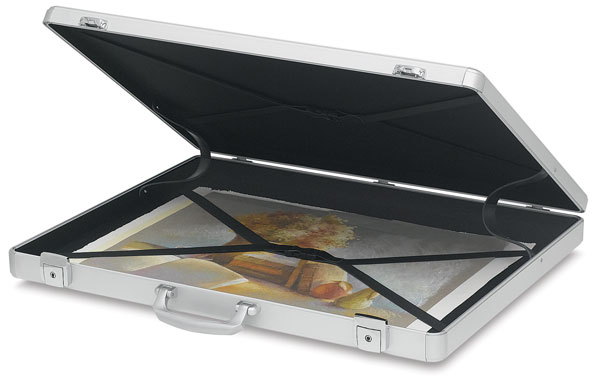
The New Case I Purchased

45 Remarkable Typography Design For Inspiration


Digital art typography has really set a great trend in 2011. Experimenting with the right choice of font, splashing with bold or plain colors, and designing it in different perspective are elements that works on typography. It uses on logo, poster, and websites. It does not only attract visitors attention but also create a cool look on your website. In this article, I’ll be featuring collection of typography inspired websites.

http://graphicdesignjunction.com/2012/01/45-remarkable-typography-design-for-inspiration/

Friday, March 2, 2012

Graphic design is a creative process—most often involving a client and a designer and usually completed in conjunction with producers of form (i.e., printers, signmakers, etc.)—undertaken in order to convey a specific message (or messages) to a targeted audience. The term "graphic design" can also refer to a number of artistic and professional disciplines that focus on visual communication and presentation. The field as a whole is also often referred to as Visual Communication or Communication Design. Various methods are used to create and combine words, symbols, and images to create a visual representation of ideas and messages. A graphic designer may use a combination of typography, visual arts and page layout techniques to produce the final result. Graphic design often refers to both the process (designing) by which the communication is created and the products (designs) which are generated.

Common uses of graphic design include identity (logos and branding), publications (magazines, newspapers, and books), advertisements and product packaging. For example, a product package might include a logo or other artwork, organized text and pure design elements such as shapes and color which unify the piece. Composition is one of the most important features of graphic design, especially when using pre-existing materials or diverse elements.
Source
Description above from the Wikipedia article Graphic Design, licensed under CC-BY-SA full list of contributors here. Community Pages are not affiliated with, or endorsed by, anyone associated with the topic.

Thursday, March 1, 2012

http://www.yupousa.com/paper/wally-awards

Call for Entries • Wally Awards 2012

It's that time. Time to show us your most stellar projects completed using YUPO Synthetic Paper. For 2012, Wally will be heading to Boston, and you're invited to participate! The Wally Awards will be held at the HOW Conference, June 20-25th.

So gather up your best work using YUPO, and get ready to WIN!
FREE TO ENTER!

Who can enter?
Anyone who has worked on a project that includes YUPO Synthetic paper!
Designers • Production Managers • Printers • Artists
Creative Directors • Paper Merchants
Package Designers • Blow Molders • Label Converters

What type of projects?
Brochures, business cards, direct mailers, maps, any and everything done on YUPO synthetic paper is eligible and can win.


What can you win?
It pays to enter. And entering is FREE!! Prizes this year include:

Best Design Entry - $500
Best Package Design Entry - $500
Best Artist Entry - YUPO Synthetic Paper Sample Prize Pack

Participants' entries will be on display for review at the 2011 HOW Conference in Chicago on June 24-26th, and attendees will be able to vote for their favorites!

How to enter?
Entering the Wally Awards is simple!
READY TO REGISTER YOUR YUPO PROJECT?
CLICK HERE! IT'S FREE!!

ENTRY DEADLINE…..JUNE 5, 2012!

http://www.yupousa.com/paper/wally-awards